Why Hands-On Learning Works for Neurodivergent Students
Why Hands-On Learning Works for Neurodivergent Students
Most conversations about neurodivergent students start with the same question: what does this student struggle with?
It’s a fair question. Support matters. But a recent feature in The San Francisco Tribune points to a question that often gets lost: what is this student exceptionally good at?
The article looked at our students’ ENIAC replica, and what it shows goes well beyond one project.
A Quick Recap
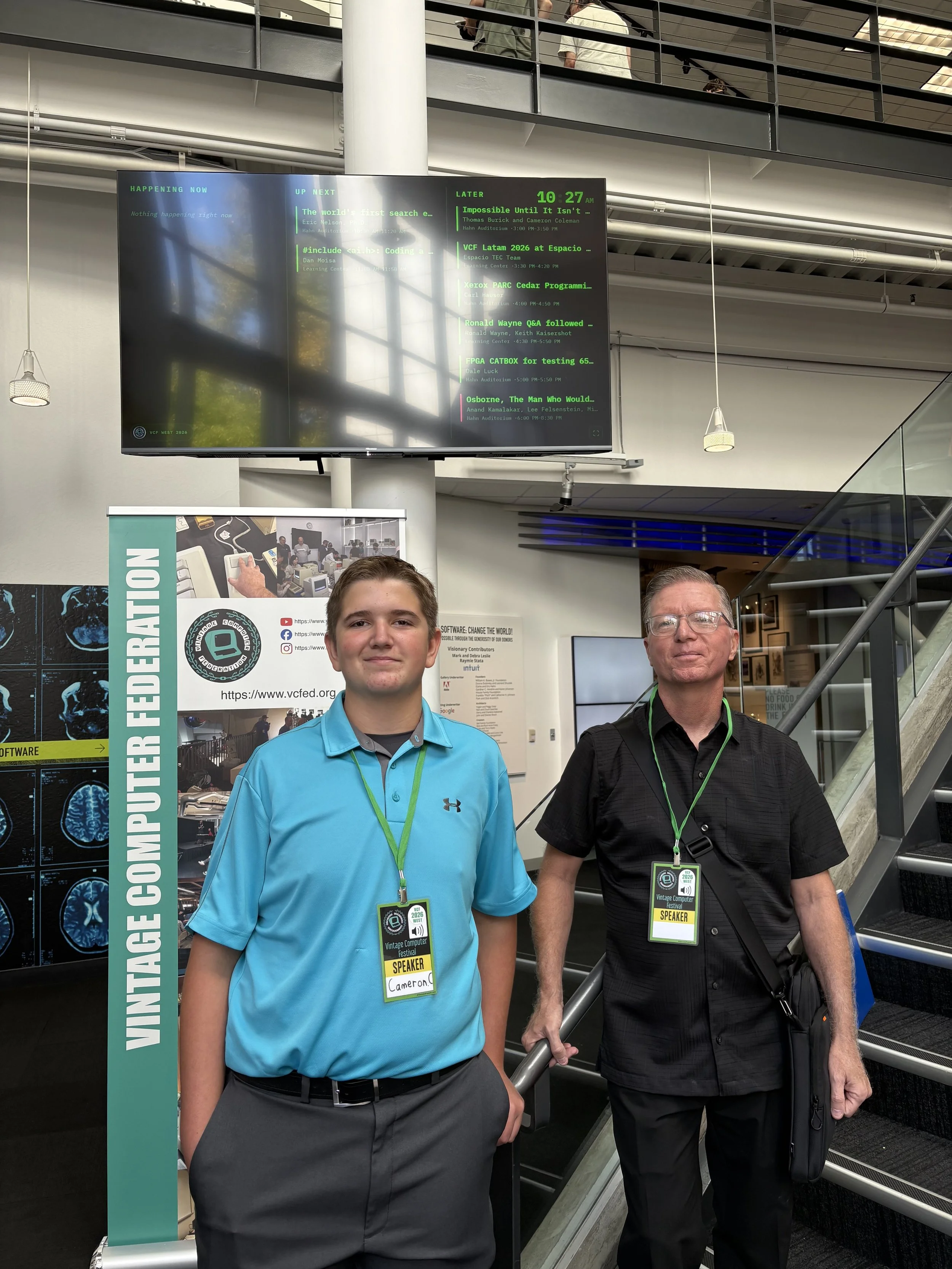
Nearly 80 PS Academy Arizona students spent six months building a full-scale replica of ENIAC, the world’s first electronic computer, from more than 22,000 cardboard components. The project was covered by PCMag, CBS News, IEEE Spectrum, and The Register. Student Cameron Coleman and technology instructor Tom Burick later presented it at the Vintage Computer Festival at the Computer History Museum in Mountain View, California.
That’s the headline. Here’s what sits behind it.
1. Strengths Show Up When Students Can Build
The Tribune pointed out something our teachers see every day: a traditional classroom doesn’t always reveal what a student can do.
A student who has a hard time sitting through a lecture may have remarkable patience when building something. A student who struggles with a written assignment may quickly understand how individual parts fit into a larger system. Hands-on projects give those strengths room to surface.
2. Seeing the Big Picture Keeps Students Engaged
On a project like ENIAC, every student could see how their piece affected the final result. For many neurodivergent learners, that connection matters. Knowing why a task matters, and where it fits, makes it easier to stay focused and invested.
3. Confidence Comes From Proof, Not Praise
Telling a student they’re capable is important. Giving them an experience that proves it is different.
As the Tribune put it, finishing something that once seemed overwhelming gives students something concrete to point to. “I helped do that” carries more weight than any compliment.
4. Hard Problems Build Real Skills
Engineering rarely comes with neatly packaged answers. Progress happens through trial, error, and teamwork. Long-term projects teach students to plan, problem-solve, collaborate, and keep going, the same skills they’ll need long after graduation.
5. Support and Responsibility Go Together
The key isn’t lowering expectations or simply raising them. It’s pairing the right support with real responsibility. When students get both, they often surprise everyone, including themselves.
What This Means for Families
If your child has been told what they can’t do more often than what they can, the right learning environment can change that story. At PS Academy Arizona, we design learning around how our students think, build, and solve problems, and we give them chances to discover their potential for themselves.
Source: “From Gilbert to Silicon Valley: What Neurodivergent Students Taught Us About Human Potential,” The San Francisco Tribune.